
The most common problem encountered by independent travelers in unfamiliar cities is not necessarily a lack of information, but rather not knowing where to look, what language to ask, and how to get there immediately after obtaining the answers. The Odawara AI-powered guided tour case integrates a LINE AI concierge and a guided tour robot within the same travel experience, allowing online inquiries to seamlessly connect with on-site services.
I. What is Odawara AI Smart Guide?
The core service is an AI concierge system. Travelers don't need to download a separate app; they can ask questions directly through their official LINE account. Upon arrival, they can also access information via the touchscreen interface of the guided robot. Both entrances share sightseeing, dining, shopping, and venue information, reducing inconsistencies in responses at different touchpoints.
II. How can travelers obtain recommendations and navigation through LINE?
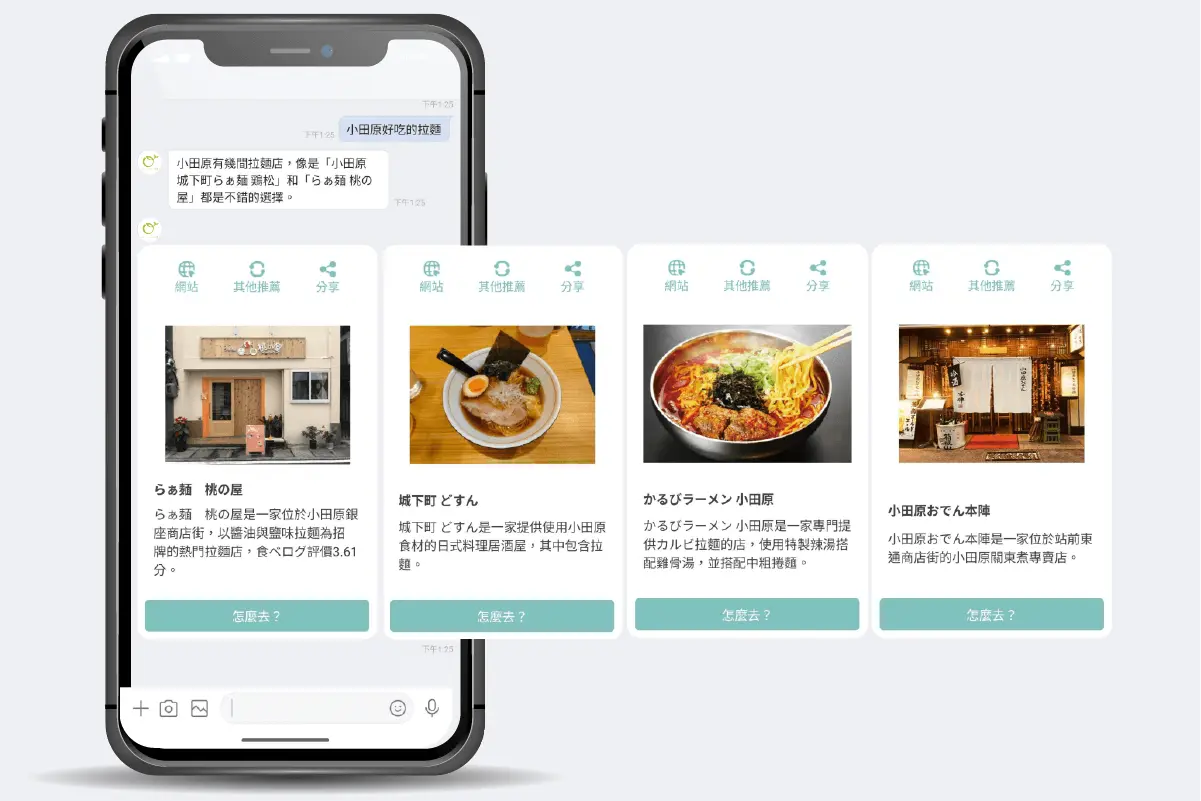
Travelers can describe their needs in Chinese, English, or Japanese, such as "Are there any recommended ramen restaurants in Odawara?" The system first understands the type and location of the restaurant, then compiles a list of recommended establishments from local data.
A complete LINE usage process typically begins with "describing needs," rather than requiring travelers to select a category first. After understanding the question, the system first lists a small number of candidate restaurants and brief reasons. Travelers can view pictures, business information, and locations, then press "How to get there?" to open the map. If the first round of results is not suitable, they can continue to add conditions such as "want to find near the station," "don't want to wait too long," or "convenient for traveling with children."
- Natural Language Questioning:No need to know the restaurant name or precise category beforehand; simply describe the cuisine you want to eat, any free time in your itinerary, or your travel companions.
- Image and Text Recommendation Cards:Options are presented with pictures, store names, and brief descriptions, reducing the need for travelers to search across multiple websites.
- Continuing Map Navigation:The "How to get there?" question on the recommendation card further opens the map, allowing the answer to be translated into actual movement.
III. How does the physical robot connect with on-site services?
When travelers arrive in the area around Odawara Station, they can directly use the guide robot's touchscreen to search without having to take out their phones first. The robot can present information on attractions, shops, and events, allowing travelers unfamiliar with the local area to get their bearings before deciding on their next step.
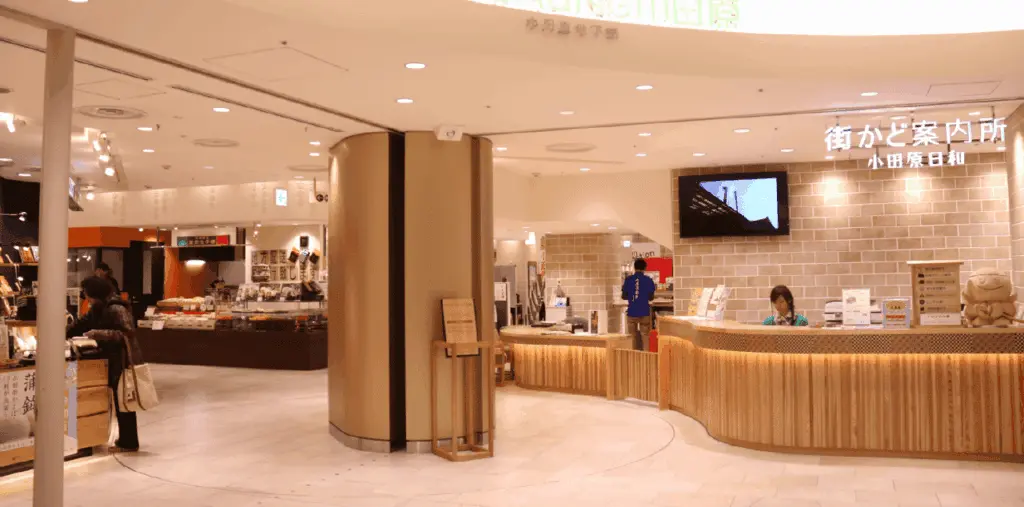
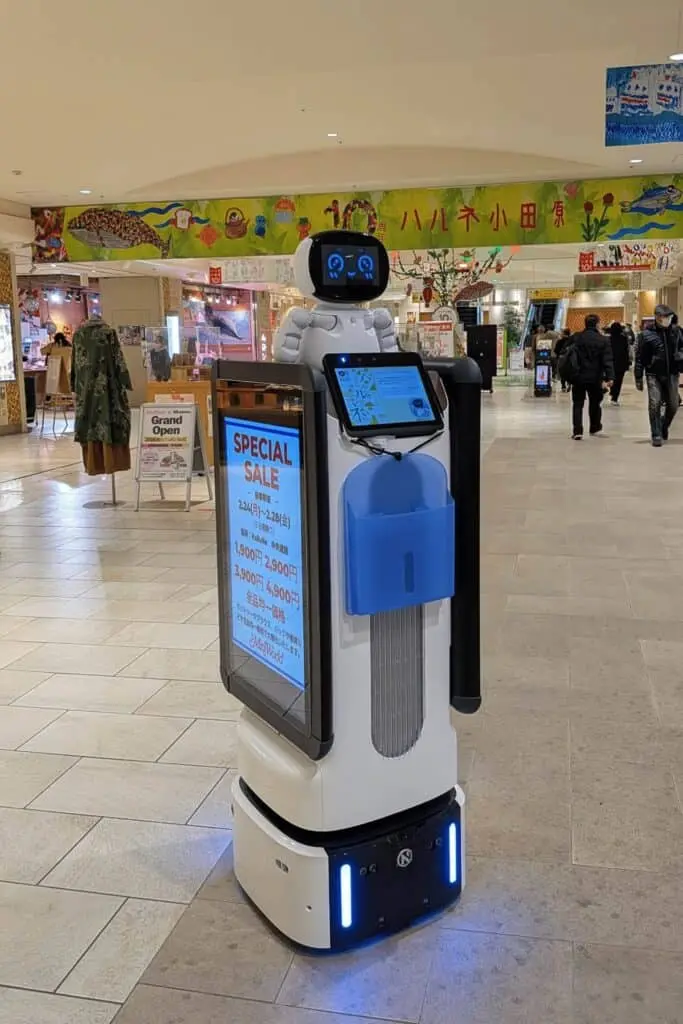
These devices are suitable for handling repetitive questions such as location information, business information, activities, and recommendations; however, in individual situations or when human judgment is required, clear instructions on how to transfer staff or counters should still be provided.
The timeliness of sightseeing information is also important. Shop closures, temporary events, construction, and traffic changes can all render previously correct answers invalid. Therefore, the backend needs to indicate the source and update time of the data and arrange for site staff to correct frequently used information. AI guides can alleviate repetitive inquiries, but they cannot replace content management and on-site response.
IV. Online-to-On-Site Usage Flow
- Before Departure:Travelers inquire about attractions, restaurants, or itinerary directions via LINE, initially creating a selection.
- While on the Move:Open the map from the recommendation card to navigate to the destination or facilities around Odawara Station.
- After Arrival:Use the physical guide robot to inquire about on-site shops, activities, and information about the next stop.
V. How Should Smart Tourism Services Be Measured?
Without publicly available before-and-after comparison data, it is inappropriate to directly claim that tourism satisfaction has been improved or labor costs reduced. A more appropriate approach is to first track whether travelers actually use the service and whether the answers help them take the next step.
The Odawara case demonstrates not just a single chatbot, but a service approach that can be continued across entry points: travelers start exploring on their mobile phones and can still obtain information using the same logic upon arrival. For tourist attractions, shopping districts, and transportation hubs, this is closer to the assistance travelers truly need than simply adding more signs.